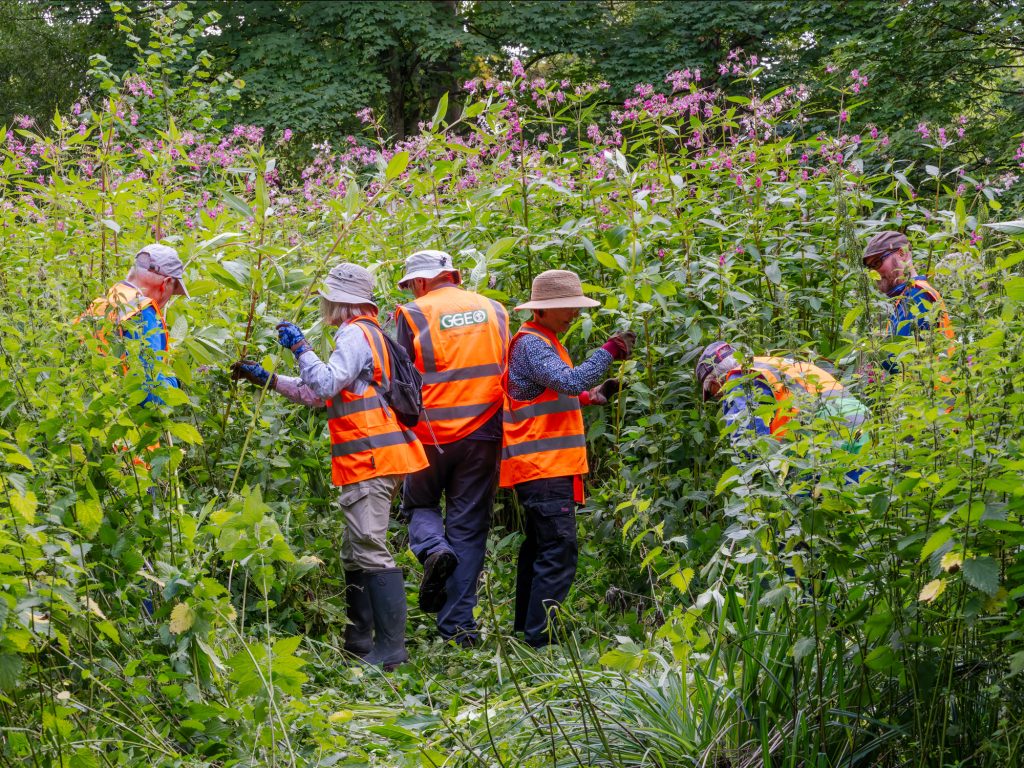
Over 2,000 plants and animals have been introduced to Britain from all over the world, many intentionally by people, often believing the novelty of finding a new flowering plant will be welcomed and popular for one reason or another. Known as non-native species, most are harmless, but around 10-15% spread and become invasive which can harm wildlife and the environment if left unchecked. Invasive non-native species are one of the top five threats to global biodiversity and once established, they can be extremely costly and difficult to control. Himalayan Balsam (Impatiens glandulifera) is top of the plant list and is problem in the Goring Gap just as it is all over the country. It was first recorded in Britain in 1855 and is a native to the west and central Himalayas. It was introduced to Kew Gardens by British botanist Dr John Forbes Royle from Kashmir who had an interest in the traditional botanical remedies used by Hindu medical practitioners.
It is found here mainly on riverbanks and damp woodland and was often introduced by gardeners into woodlands and parks and sometimes used for game cover. It is an annual and spreads by its explosive seed heads which can distribute around 800 seeds. Many of these often float down the river and attach themselves to the banks and start new colonies where if forms monoculture and excludes and shades out our native species and eco-systems.
The Goring Gap Environmental Organisation decided starting to control this species locally should be one its two main projects, along with water quality monitoring of the Thames in Goring. GGEO volunteers were asked if they would like to attend a special training evening to learn about this problem and a number came forward and spent an evening at the Boathouse at the Swan Hotel where our ecologist advisor worked through all the information needed, aided by a comprehensive PowerPoint programme he produced. At the end of the session all the issues including differential identification, the various sections of legislation and authorised disposal methods etc were understood and the team was ready to start work.
We had already identified the locations needed the most attention (the island under the bridge and some downstream) and the landowner’s permission was sought and given willingly and were most grateful for helping them in this way.
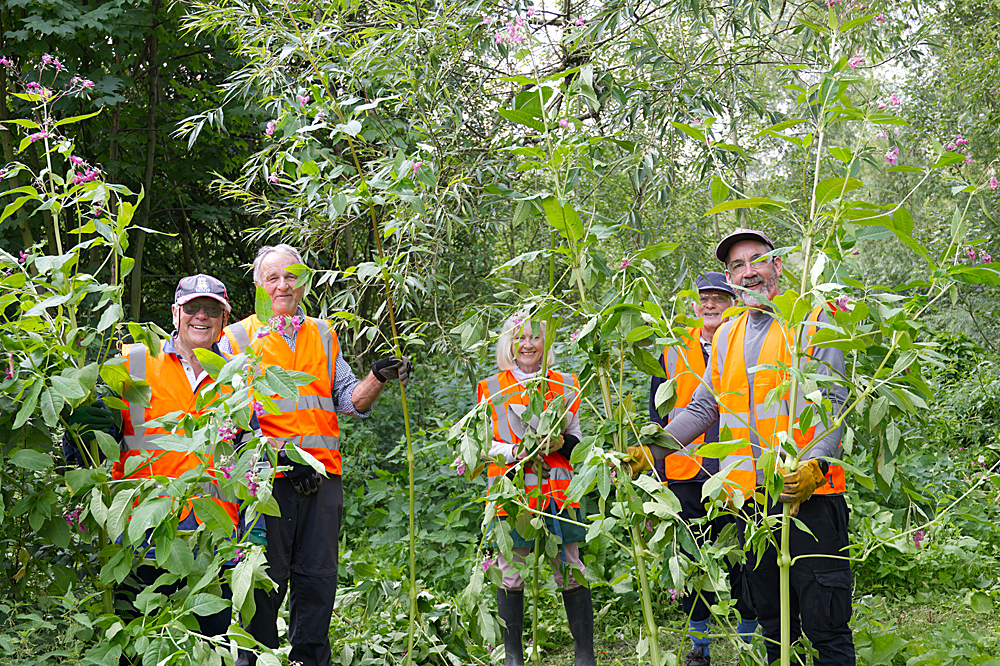
A number of sessions were arranged and when we started the project nine members of the Balsam team pulled out around 10,500 plants during the first year, many of them giant specimens around 9 feet tall, as shown in one of the photographs, the maximum height known for this species and each year we pull Balsam in the same locations we discover significantly fewer plants, demonstrating our annual work parties are making a measurable difference! This is an ongoing project, as each year more plants will appear and so the process of removing them needs to be an annual summer event.
For further information about this plant, visit the GB Non-native Species Secretariat (NNSS) website.
Anyone who may like to help in the future with this ongoing project or other environmental activities, we would welcome you contacting us and letting us know how you might like to get involved. You can do this by visiting our contact page or emailing ronbridle@btinternet.com.